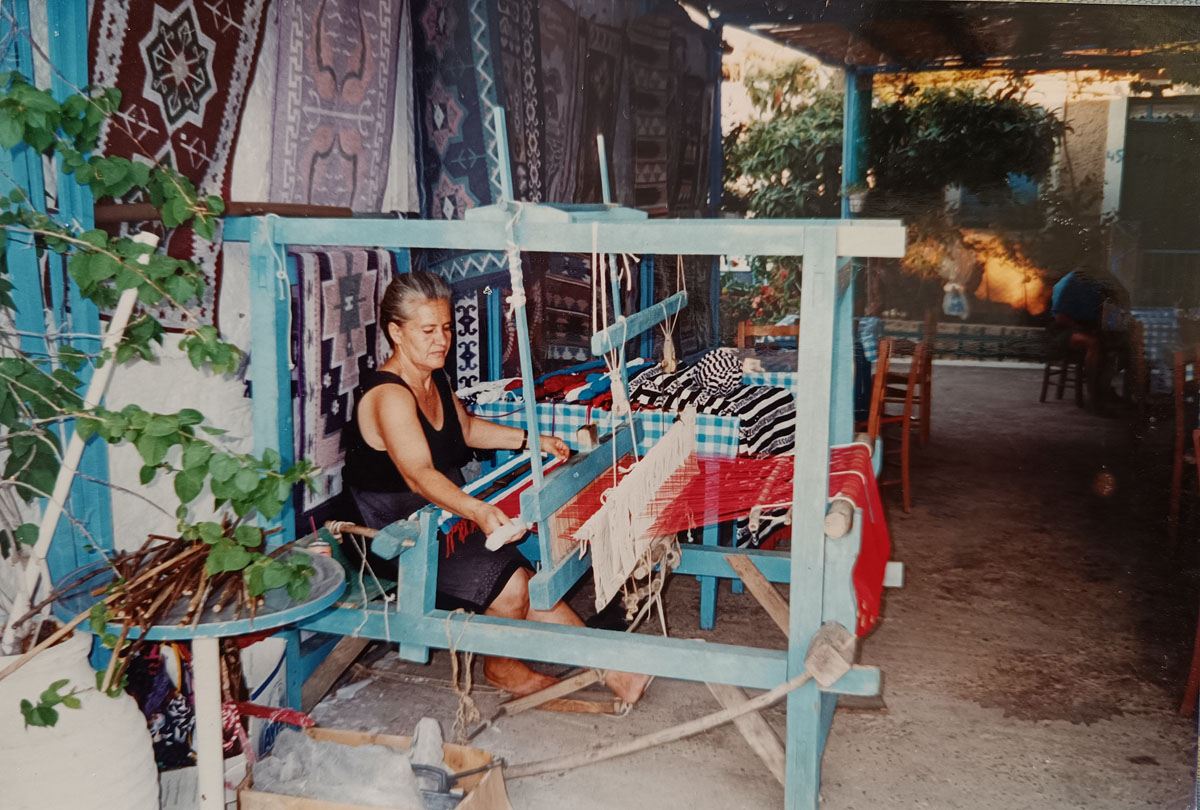
Description : During the 18th century, the art of weaving flourished in our country. Weaving loom embroidery, along with other folk arts, was in harmony with the Greek aesthetic tradition. It featured plant motifs, scenes from local history, narrative representations of weddings, and themes from Turkish and Byzantine struggles. These motifs were applied to all kinds of woolen utilitarian and decorative weavings. The economic comfort of the host was reflected in many woven fabrics, with significant differences found in island and mountainous regions due to geographical specificity and the particularity of the raw materials. In the first decades of the second half of the 20th century, after the decline of domestic cottage industry, weaving began to decline.
Bibliography / Comments : Αγγελοπούλου – Βολφ, Ε (1986). Ο αργαλειός. Αθήνα: Δόμος.
Σπανού, Μ. (2008). Τάση αναζωπύρωσης της αρχαιοτέρας των τεχνών, της υφαντικής τέχνης: Η αναβίωσή της στον Βόλο από το Λύκειο Ελληνίδων.
Some Weaving looms have survived on the island, one of which is owned by Mr. Antoniou Stamatis.


 English
  Greek
Greek